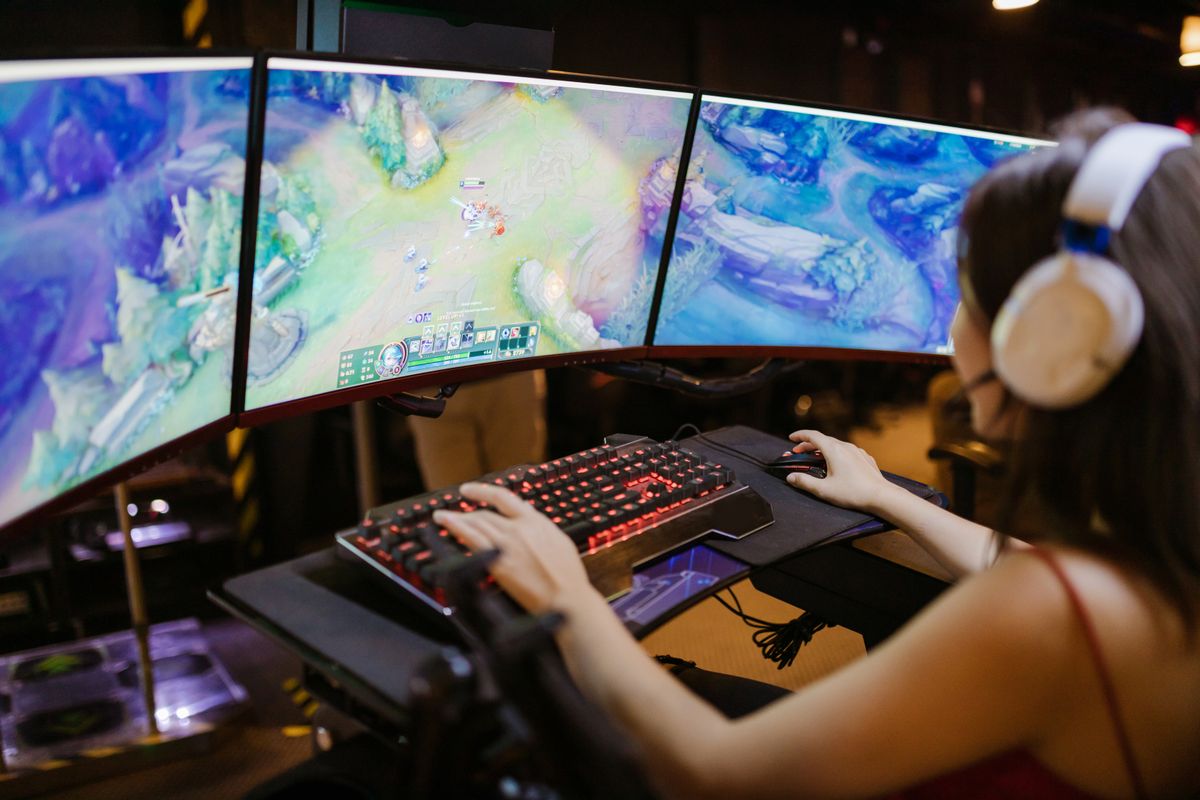
Esports, short for electronic sports, refers to organized competitive video gaming in which professional players and teams compete against each other, often in front of large live and online audiences. What was once a niche hobby has grown into a global industry that fills arenas, draws millions of online viewers, and offers prize pools worth many millions of dollars.
At its simplest, esports takes the structure of traditional sports and applies it to video games. There are professional players who train full-time, teams and organizations that sign and support them, leagues and tournaments with schedules and standings, coaches and analysts, and dedicated broadcasts complete with commentators, often called "casters." The main difference is that the field of play is a video game rather than a physical pitch or court.
Esports is not a single game but a collection of competitive titles, usually grouped by genre. Multiplayer online battle arena (MOBA) games, such as League of Legends and Dota 2, feature two teams of five battling to destroy each other's base. First-person shooter (FPS) games, such as Counter-Strike and Valorant, pit teams against each other in tactical gun battles built around precise aim and coordination. Other major categories include fighting games (one-on-one combat titles), real-time strategy games, sports simulations like the football video game series, and battle royale games where many players fight to be the last one standing.
The competitive calendar is built around leagues and tournaments. Some titles run season-long professional leagues, similar to a traditional sports season, culminating in playoffs and a championship. Others are built around large standalone tournaments. Dota 2's premier event, The International, became famous for prize pools that grew into the tens of millions of dollars, funded partly by the game's own community. League of Legends holds an annual World Championship that draws enormous global viewership and sells out major arenas.
A professional esports team usually fields a roster of players who specialize in particular roles within their game, supported by a coaching staff that studies strategy, reviews recorded matches, and prepares game plans against specific opponents, exactly as a traditional sports team would. Top players train for many hours a day to sharpen their mechanics, reaction times, and teamwork, and careers can be intense but relatively short, with many players peaking in their late teens and early twenties.
Broadcasting is central to esports. Matches are streamed live on platforms dedicated to gaming, where viewers can watch for free, follow their favorite teams, and interact through live chat. This accessibility is a big reason the audience has grown so quickly. Major events are also produced with the polish of a television sports broadcast, featuring pre-match analysis, replays, player interviews, and elaborate stage productions.
Revenue in esports comes from familiar sources: sponsorships, advertising, media rights, ticket sales for live events, and merchandise, along with in-game purchases tied to competitions. Established brands from outside gaming have increasingly invested in teams and events, a sign of how seriously the industry is now taken.
There is ongoing debate about whether esports counts as a "real" sport, but that argument is largely semantic. What is clear is that competitive gaming demands elite reflexes, deep strategic knowledge, teamwork, and the ability to perform under intense pressure. Whether or not it fits a traditional definition, esports has built a genuine, global competitive ecosystem, and its audience continues to grow year after year.
About Jordan Park
Jordan Park is a sports journalist covering Esportsand major international sporting events. Their work focuses on analysis, athlete performance, tournament coverage, and breaking sports news.