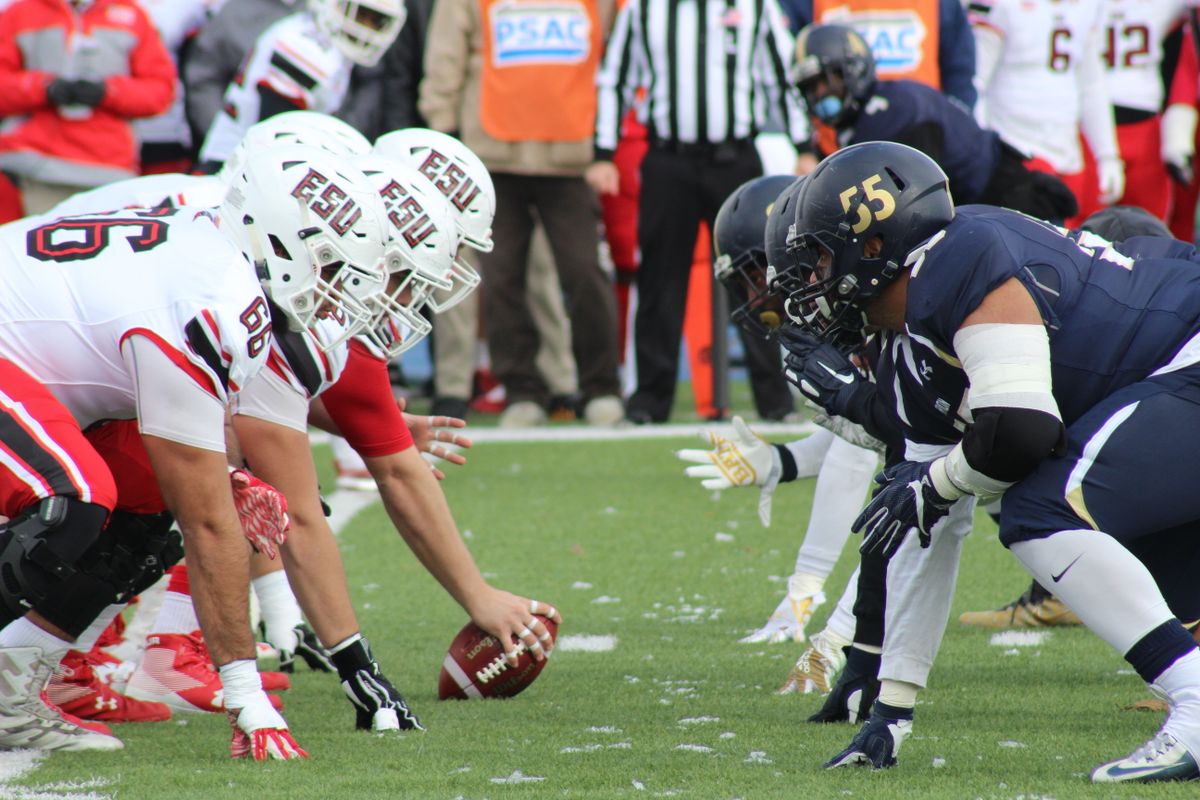
American football is one of the most popular sports in the United States, but to newcomers it can look like a bewildering series of stops, starts, and huddles. Beneath the surface, though, is a game of clear objectives and elegant strategy. Learn a few core concepts and it quickly makes sense.
Each team has eleven players on the field at a time, and the goal is simple: move an oval ball down a 100-yard field and into the opponent's end zone to score, while the defense tries to stop them. One team is on offense, trying to advance and score, while the other is on defense, trying to prevent it. Teams switch between offense and defense depending on who has the ball.
The single most important concept for a beginner is the system of downs. When a team has the ball, it is given a set of four attempts, called downs, to advance the ball at least ten yards. If it succeeds, it earns a fresh set of four downs and continues its drive toward the end zone. If it fails to gain ten yards within four downs, possession passes to the other team. This is why you will constantly hear phrases like "third and five," meaning it is the third down with five yards still needed. Because of this, teams usually use their fourth down to punt (kick the ball far downfield to the opponent) rather than risk turning it over, unless they are close to scoring or desperate.
Scoring comes in several forms. The biggest prize is the touchdown, worth six points, scored by getting the ball into the opponent's end zone. After a touchdown, the scoring team can kick the ball through the goalposts for one extra point, or attempt a riskier play from close range for two points. A field goal, worth three points, is kicked through the goalposts and is often attempted when a team has advanced close to scoring range but stalled. Finally, a safety, worth two points, is a rarer score awarded to the defense when they tackle an offensive player in his own end zone.
Advancing the ball happens in two main ways: running with it or passing it. On a running play, a player carries the ball forward through the defense. On a passing play, the quarterback, the offense's key decision-maker, throws the ball to a receiver downfield. The defense tries to stop these plays by tackling the ball carrier, breaking up passes, or, most dramatically, forcing a turnover by intercepting a pass or recovering a fumbled ball.
The game is divided into four quarters, each fifteen minutes of playing time, with a longer break at halftime. The clock stops frequently, for incomplete passes, players going out of bounds, and other situations, which is why a game takes much longer than an hour to complete and why clock management becomes a strategy of its own late in games.
Teams are highly specialised. Beyond the offense and defense, there are "special teams" units that handle kicking situations such as field goals, punts, and kickoffs. Players are often experts in narrow roles, which is part of why American football rosters are so large.
Once you grasp the four-downs system, the ways to score, and the basic split between running and passing, American football reveals itself as a deeply strategic game, often compared to chess, where every play is a planned battle for a few precious yards, and field position and clock management can matter as much as raw athleticism.
About Tyler Johnson
Tyler Johnson is a sports journalist covering American Footballand major international sporting events. Their work focuses on analysis, athlete performance, tournament coverage, and breaking sports news.