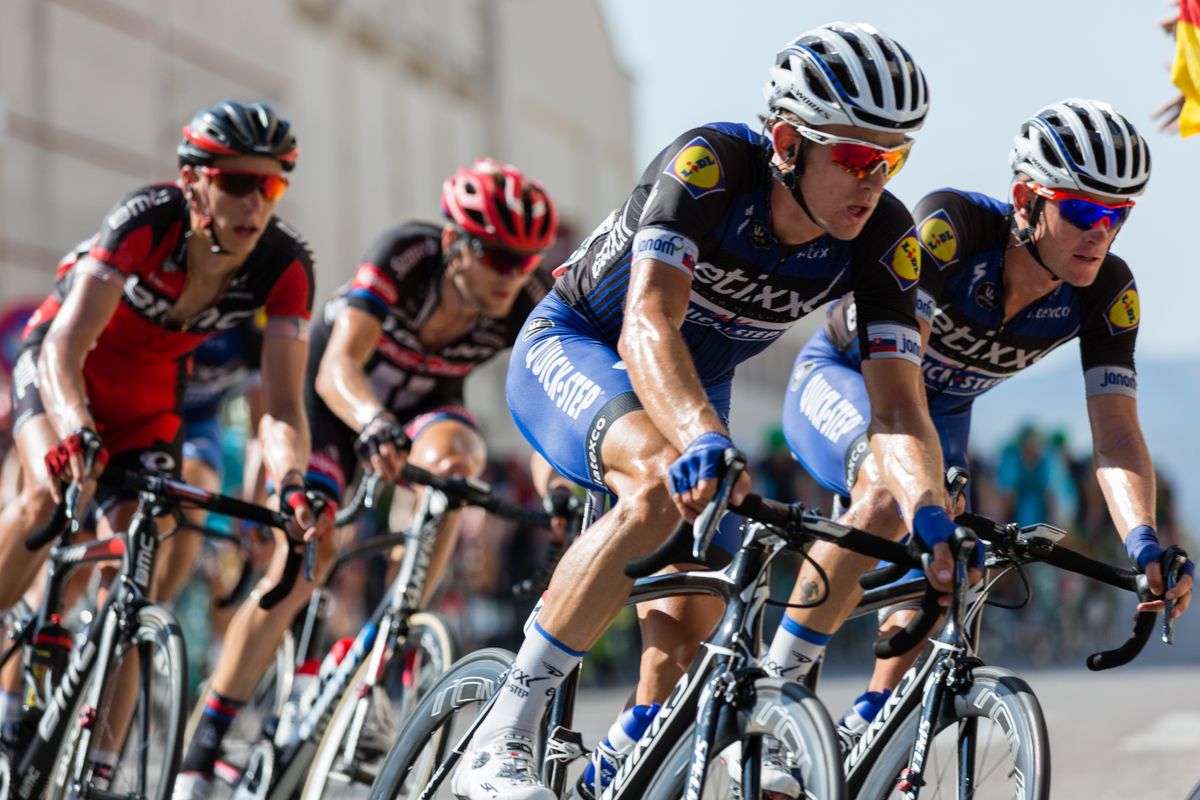
The Tour de France is the most famous cycling race in the world, a gruelling three-week test of endurance, strategy, and teamwork across the roads of France and neighbouring countries. To a newcomer it can look chaotic, a huge pack of riders covering vast distances, but the race follows a clear structure, and its coloured jerseys tell a fascinating story.
The Tour is a stage race, meaning it is not a single event but a series of individual races, called stages, held on consecutive days. There are typically 21 stages spread over about three weeks, with a couple of rest days built in. Each day's stage covers a different route and terrain, and the total distance ridden across the whole Tour is roughly 3,500 kilometres. The rider who completes all the stages in the lowest combined time is the overall winner.
That combined-time competition is called the general classification, and it is the heart of the Tour. Every rider's finishing time is added up day after day, and the rider with the lowest cumulative time leads the race. This is why the Tour rewards consistency and endurance above all: a rider must perform across flat sprints, brutal mountain climbs, and time trials, day after day, for three weeks.
The stages themselves come in different types. Flat stages usually end in dramatic mass sprints, where fast finishers battle for the line at high speed. Mountain stages, through ranges like the Alps and Pyrenees, are where the overall race is often won and lost, as climbers attack on steep ascents and gaps in time open up. Time trials are raced individually against the clock, testing raw power and aerodynamics without the tactics of the pack.
The famous coloured jerseys are the key to following the competition. The yellow jersey (the maillot jaune) is worn by the overall race leader, the rider with the lowest cumulative time, and it is the prize every contender dreams of wearing in Paris. The green jersey rewards the best sprinter, awarded through a points system that favours high finishes on flatter stages. The polka-dot jersey, white with red spots, goes to the "King of the Mountains," the rider who accumulates the most points on categorised climbs. The white jersey is worn by the best young rider, the highest-placed competitor under the age of 26.
Teamwork is a crucial and often underappreciated part of the Tour. Riders compete in teams, and while only one rider can win the overall title, teammates known as "domestiques" sacrifice their own chances to support their leader, shielding them from the wind, fetching food and water, and pacing them up climbs. The peloton, the main pack of riders, moves as a strategic mass, and understanding when teams push the pace or allow a breakaway to escape is central to the tactics.
The race famously finishes in Paris, traditionally with a ceremonial final stage ending on the Champs-Élysées, where the overall winner is celebrated even though the general classification is usually decided the day before. Crossing that finish line in the yellow jersey is the pinnacle of the sport.
Once you understand the stage-race format, the all-important general classification, and what each coloured jersey represents, the Tour de France transforms from a confusing blur into a rich, multi-layered contest, part individual battle, part team strategy, played out over three of the most demanding weeks in sport.
About Pierre Dubois
Pierre Dubois is a sports journalist covering Cyclingand major international sporting events. Their work focuses on analysis, athlete performance, tournament coverage, and breaking sports news.